Ankit Sharma
Product Designer
Available for Work
Overview
Geo Vortex is a geospatial intelligence platform that helps teams make better decisions using location-based data. Many organizations collect massive amounts of geographic information, but struggle to turn it into something understandable or actionable. Maps become cluttered, insights get buried, and decisions are made without seeing the full spatial picture.
Designed for planners, analysts, and decision-makers, Geo Vortex provides intuitive visualizations, smart data layers, and analytical tools that support confident planning and strategy. From urban development and logistics to market expansion and risk analysis, Geo Vortex helps teams see how location impacts outcomes.
Vision/Mission
The vision behind Geo Vortex is to make spatial data feel simple, readable, and trustworthy. The mission is to transform raw geographic information into clear visual signals that guide real-world decisions. Rather than overwhelming users with data, Geo Vortex focuses on showing what matters most and where it matters.
Brand Personality
Geo Vortex is:
Clear and calm
Analytical but approachable
Confident, not loud
Focused on problem-solving
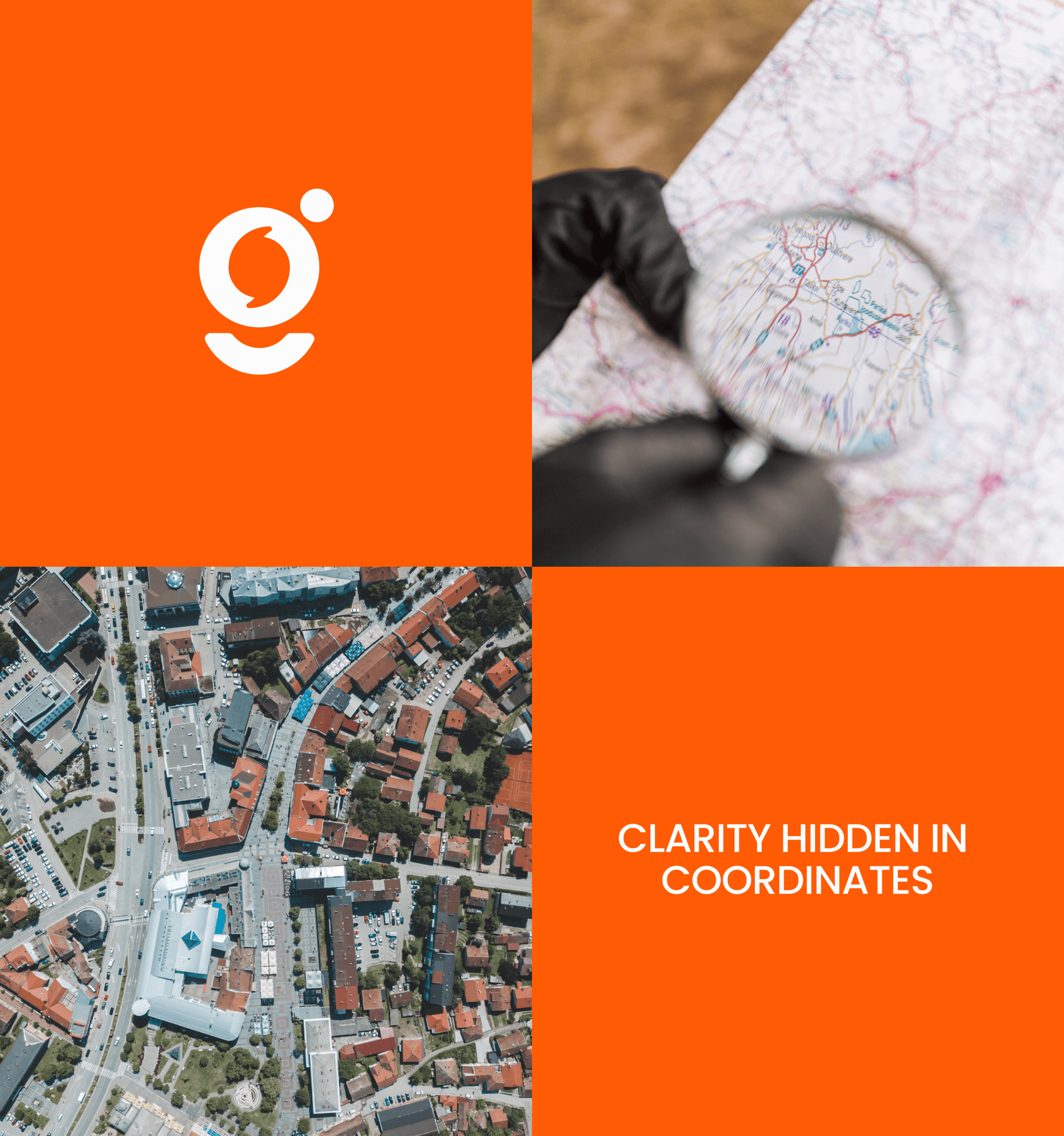
The brand avoids being loud or expressive. Instead, it feels stable, focused, and trustworthy, helping users concentrate on insights rather than interface noise.
Logo
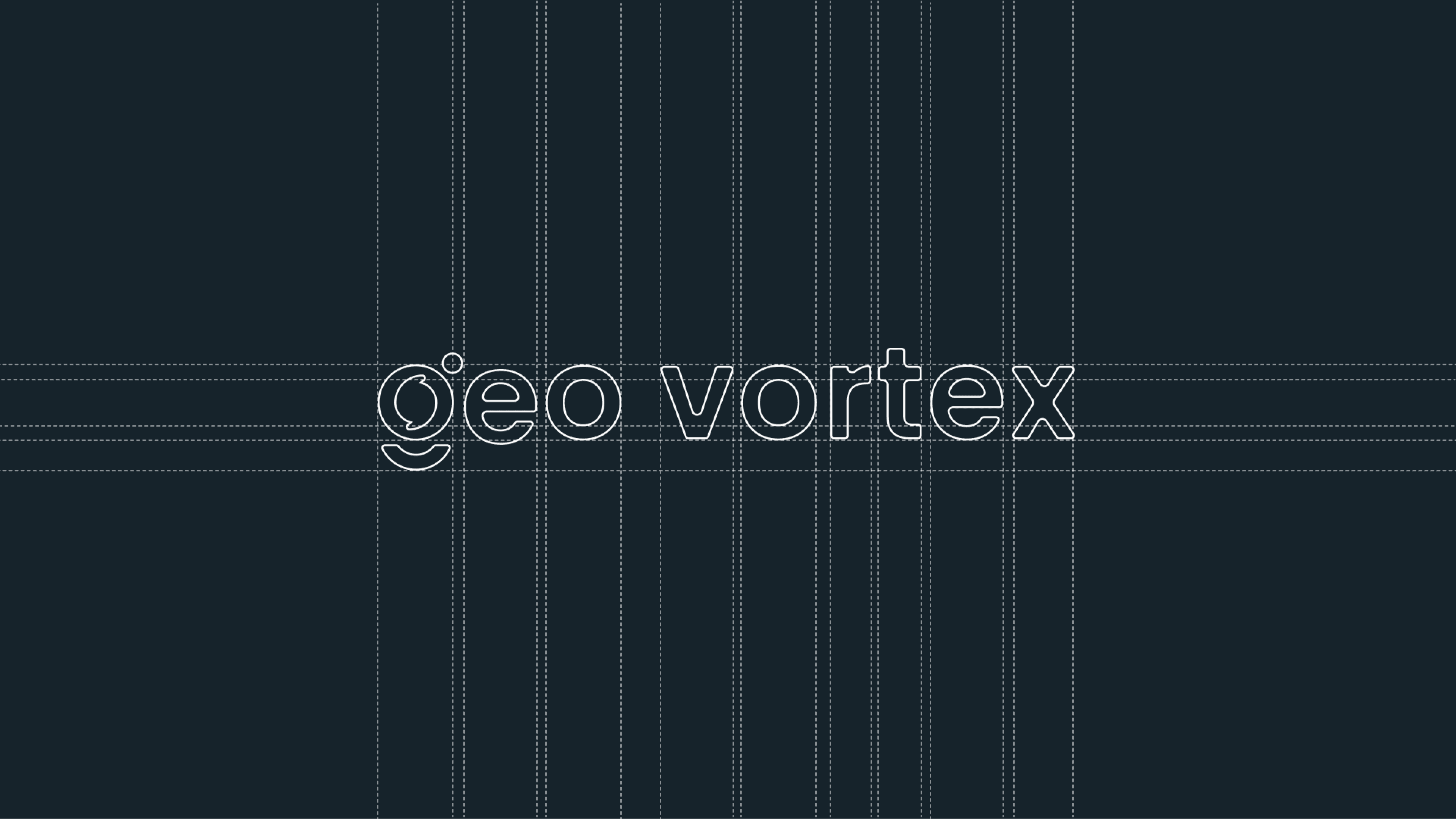
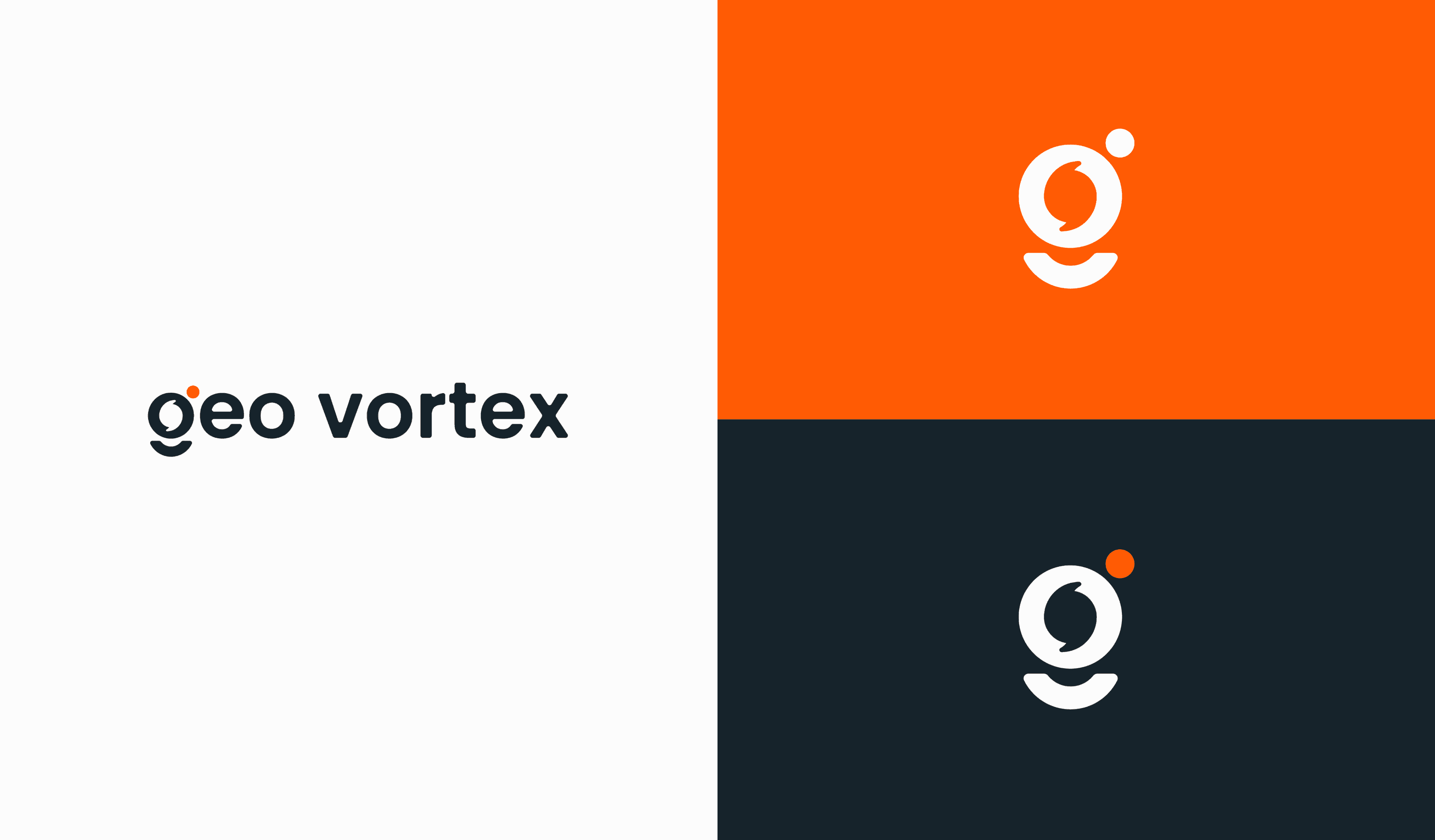
The logo was designed as a minimal vector vortex shape built from simple geometry. A vortex naturally represents movement and convergence, which aligns with how Geo Vortex works—pulling scattered data points into a single focused view. The small dot acts as a focal point, symbolizing a key data signal or location of interest.
Keeping the logo minimal ensures it scales well across digital products and remains recognizable at small sizes. Rather than using literal symbols like maps or location pins, the abstract vortex avoids common clichés while still communicating analysis and direction. The circular form represents a complete system, the rotational shape suggests ongoing analysis, and the central focus point reflects insight and decision-making.
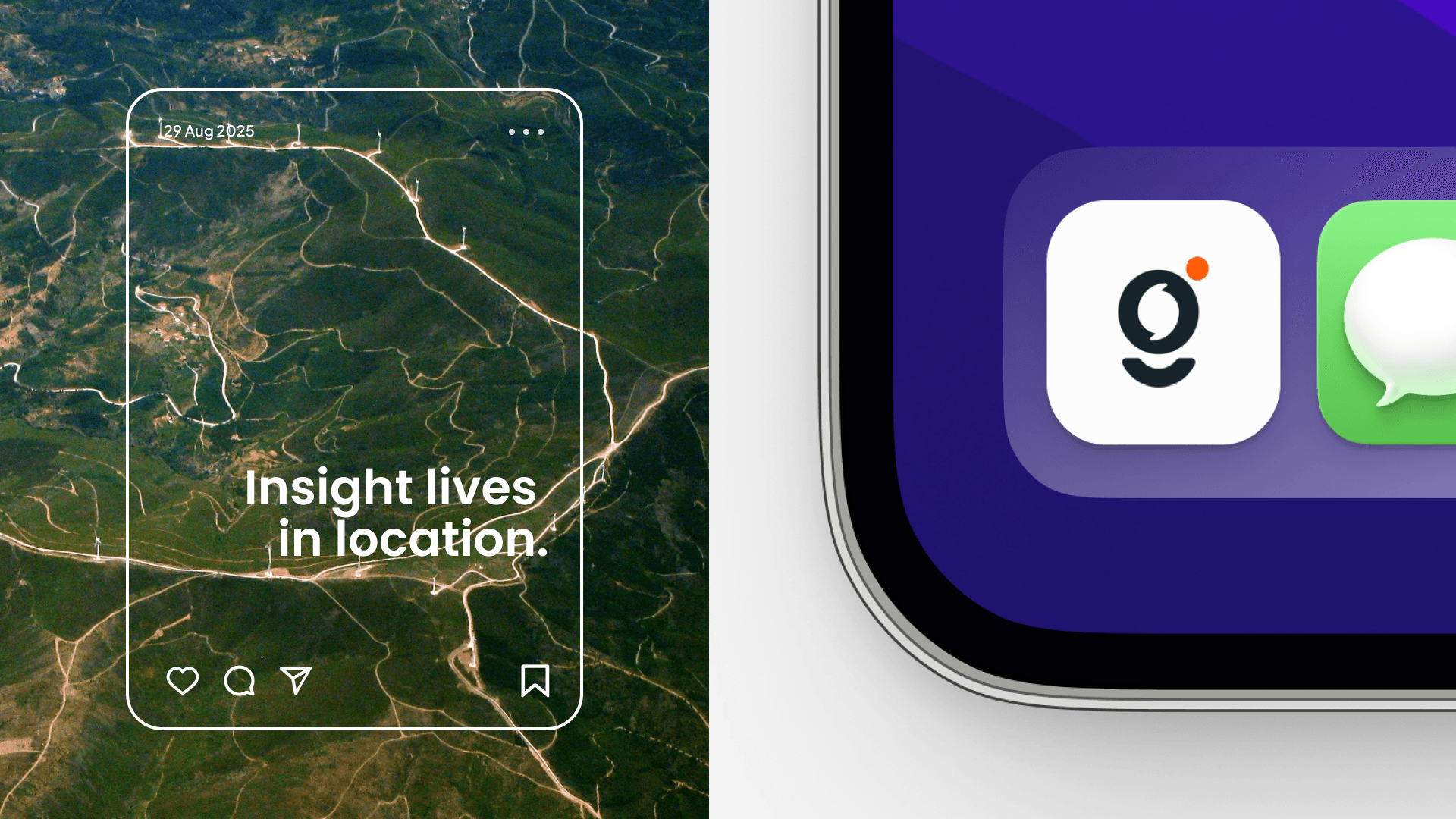
The logo is used both as a full mark and as a standalone icon, allowing it to work across dashboards, app icons, and interface elements without losing clarity.
Color Palette
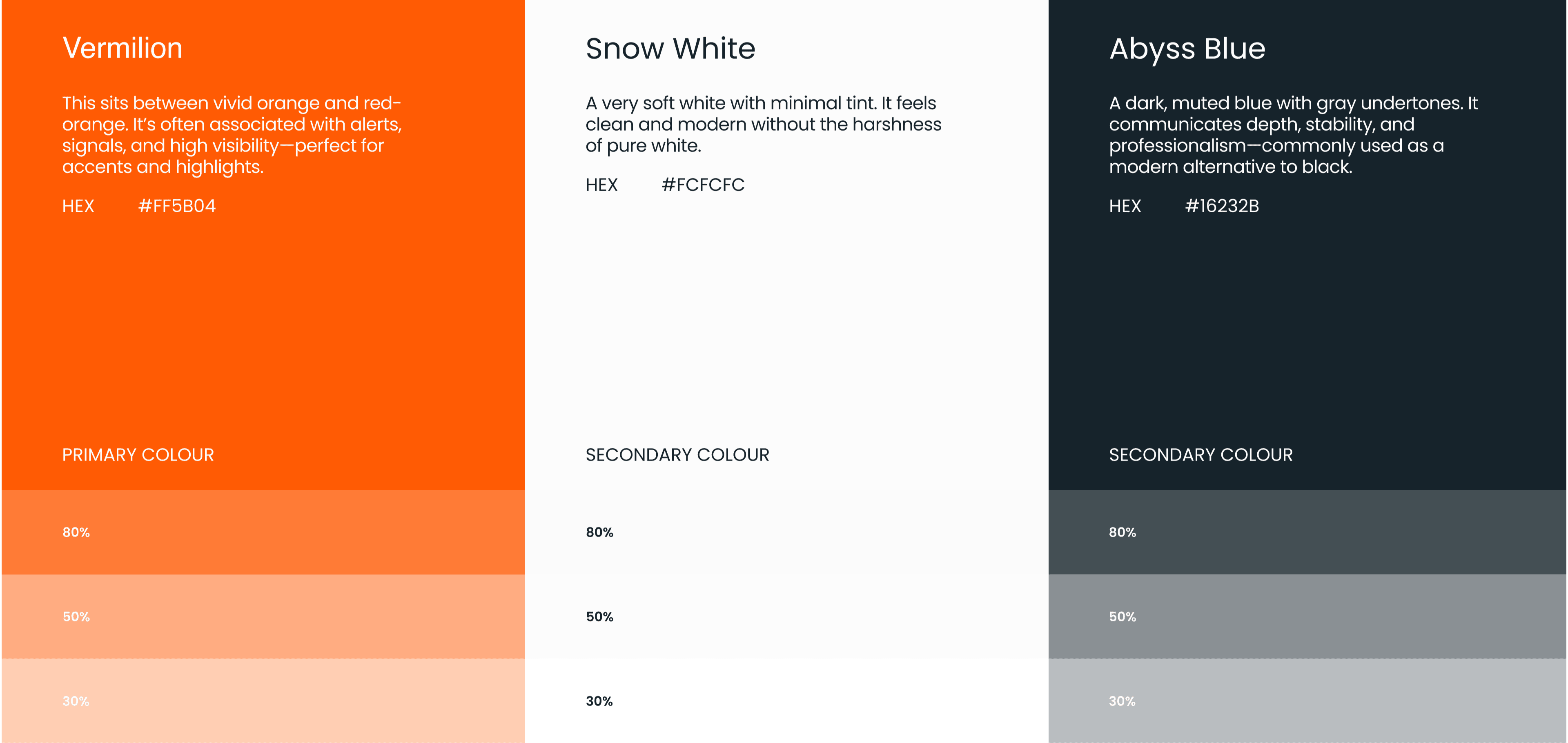
Geo Vortex uses a minimal, high-contrast color system designed to bring clarity and focus to complex spatial data. A deep, neutral base creates a sense of stability and trust, while the vibrant accent color acts as a point of attention—highlighting key locations, interactions, and insights.
The dark and light neutrals provide flexibility across interfaces, ensuring readability in both data-dense dashboards and simple brand moments. The accent color introduces energy and direction to the design.
Together, the Geo Vortex color palette balances precision with personality. It supports clear decision-making, improves visual hierarchy, and reinforces the brand’s role as a guide through complex geographic information—clean, confident, and purposeful.
Typography
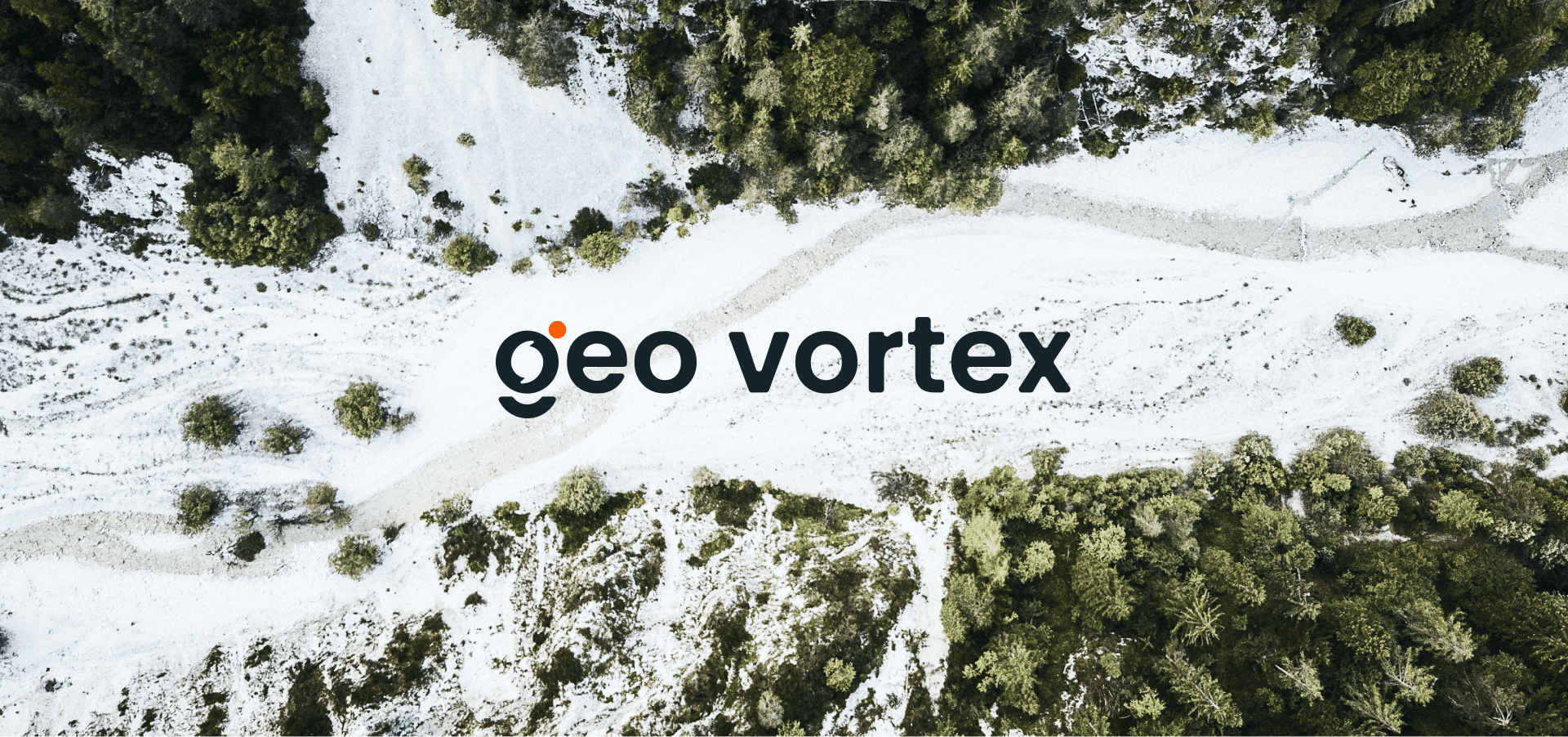
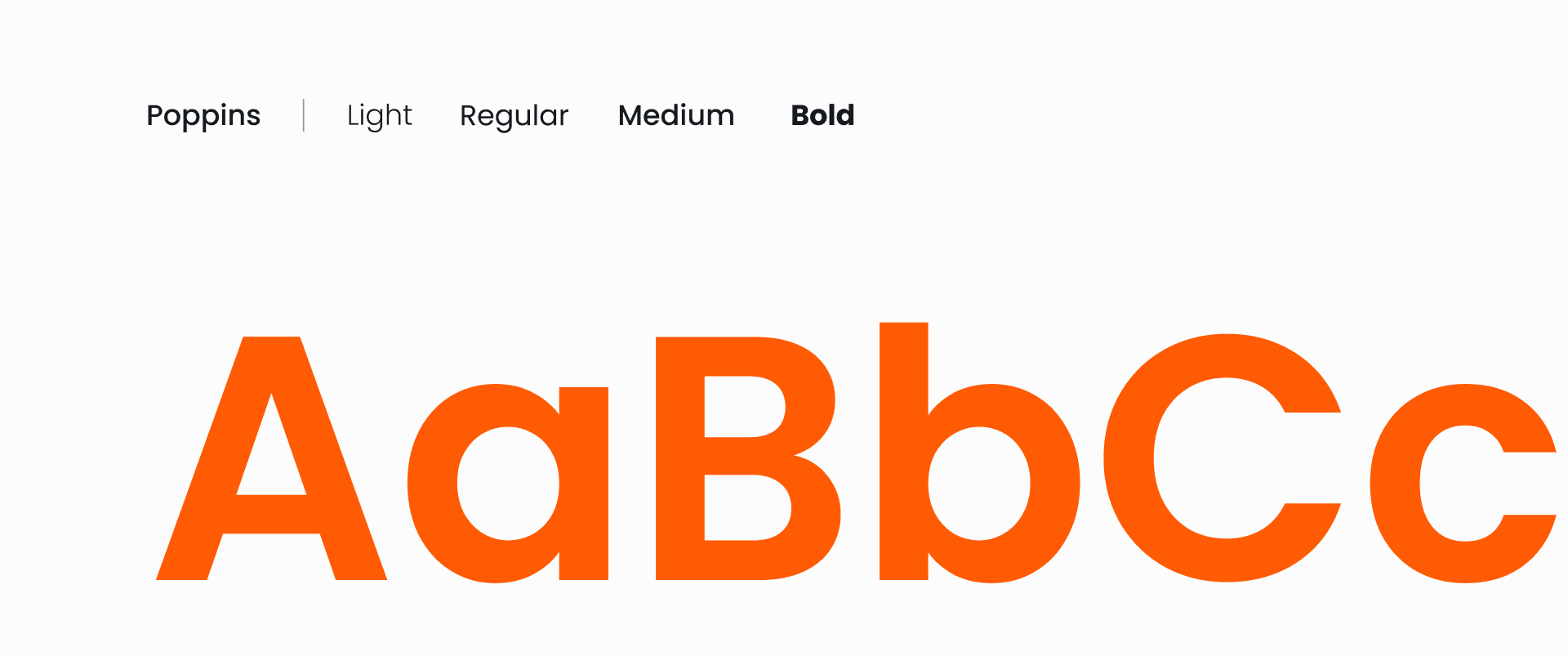
The typography of Geo Vortex is built around a custom wordmark derived from Poppins, a modern geometric sans-serif typeface. Poppins was chosen for its clean shapes, balanced proportions, and strong geometric foundation, which aligns naturally with Geo Vortex’s focus on structure, systems, and spatial logic.
The logo uses a customized version of Poppins to create a distinctive yet minimal wordmark, while the standard Poppins typeface is used across the rest of the brand identity. This creates consistency between the logo and supporting text, allowing the brand to feel unified across product interfaces, marketing pages, and documentation.
Poppins’ clarity and versatility make it well-suited for both headings and body text, especially in digital, data-heavy environments. Its neutral and modern character ensures that typography supports readability and problem-solving without drawing unnecessary attention to itself, helping users focus on information and insights rather than decoration.
Imagery & Visuals
Imagery and visuals are data-driven and abstract rather than illustrative. Maps, grids, layers, and directional flows are used to communicate movement and relationships. Visuals avoid decoration and focus on structure, reinforcing the idea that Geo Vortex is a tool for clarity and understanding.

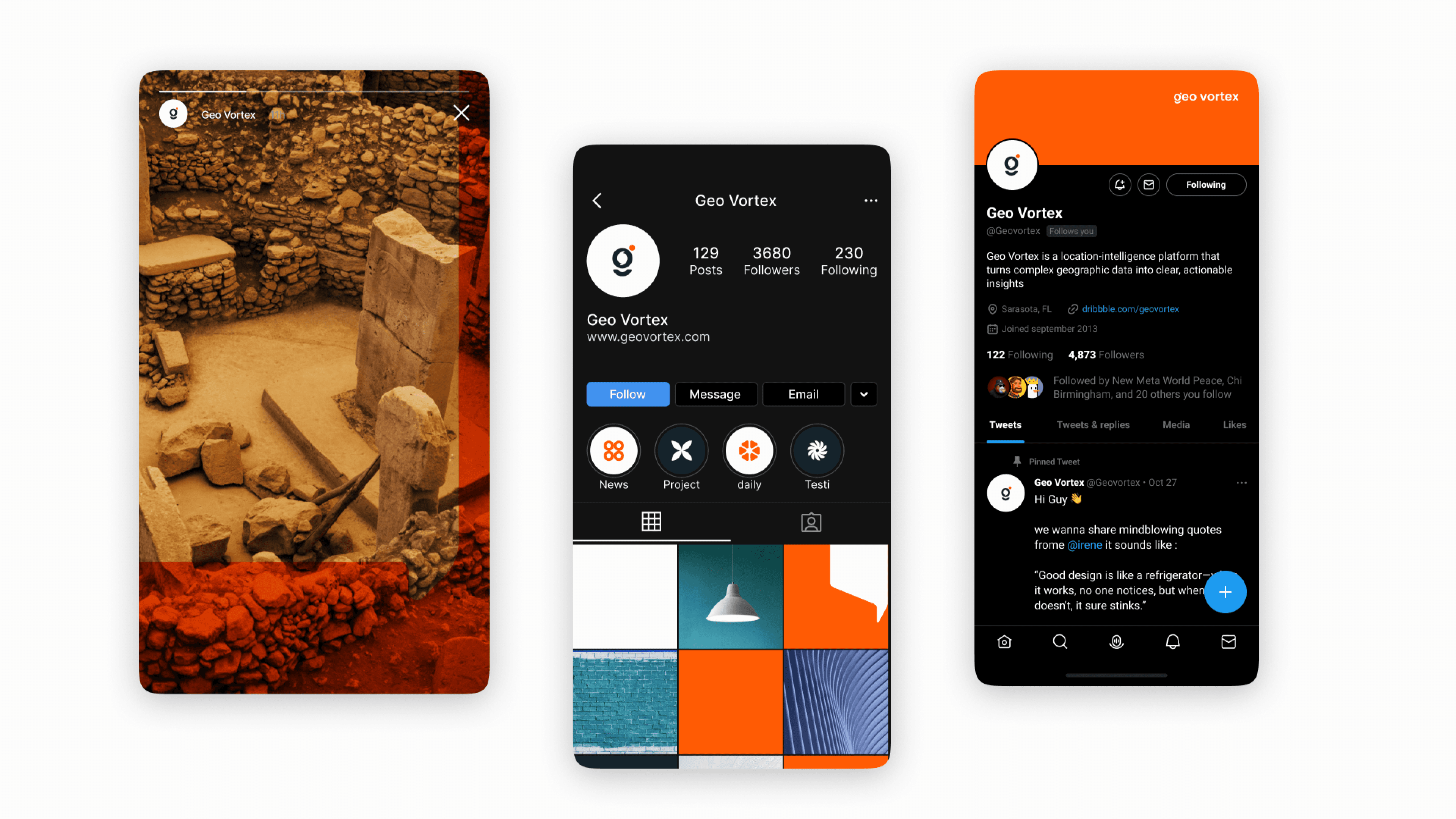
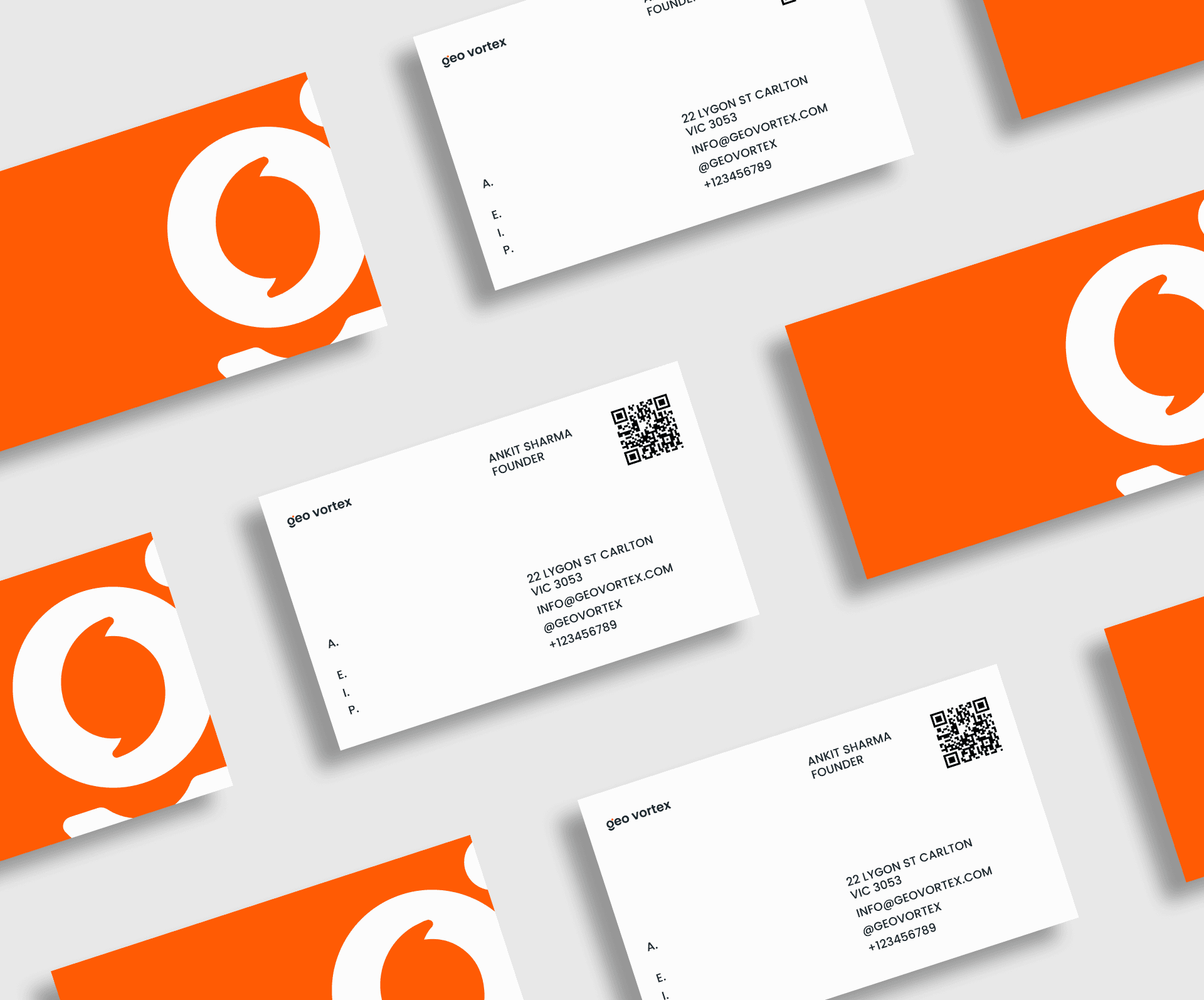
Applications & Mockups